Address:
6F No.18 Yucai Rd, Dalingshan Town, Dongguan, Guangdong, China
Business Hours: Mon–Fri 9AM–6PM (GMT+8)
Address:
6F No.18 Yucai Rd, Dalingshan Town, Dongguan, Guangdong, China
Business Hours: Mon–Fri 9AM–6PM (GMT+8)
The 12.8V 24Ah LiFePO4 (LFP) battery pack delivers 307Wh in a 2.3kg form factor that directly replaces 12V lead-acid batteries. This guide covers the LFP chemistry advantage, key specifications, and the applications where LiFePO4 outperforms lead-acid by 4× in cycle life.
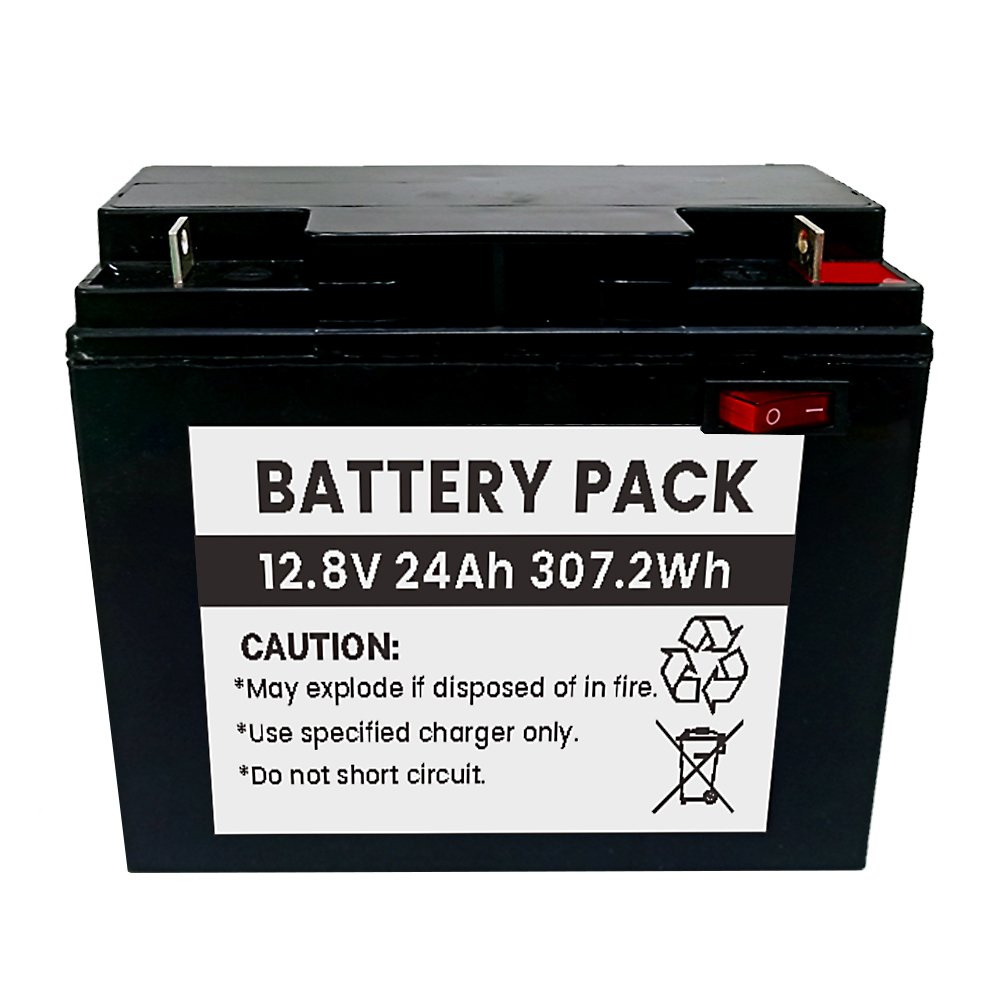
If you are still running 12V applications on lead-acid batteries, the math is increasingly hard to defend. A 12.8V 24Ah LiFePO4 (LFP) battery pack weighs 2.3kg, lasts 4–5× longer, and delivers more usable capacity than the equivalent 12V 24Ah sealed lead-acid battery it physically replaces. This guide explains why the chemistry upgrade is happening now, what makes the 12.8V 4S1P LFP format so versatile, and exactly which applications benefit most from making the switch.
The 12.8V nominal voltage comes from a 4-cell LiFePO4 configuration (4S), where each cell has a nominal voltage of 3.2V. This sits almost exactly at the operating voltage of a 12V lead-acid battery (which ranges from 10.8V at 20% SOC to 14.4V at full charge), making LFP a near-drop-in replacement for most 12V systems.
Not all lithium-ion batteries are the same. The two dominant chemistries for energy storage applications are NMC (lithium nickel manganese cobalt oxide) and LFP (lithium iron phosphate, LiFePO4). For stationary and semi-portable 12V applications, LFP consistently outperforms NMC on the metrics that matter most:
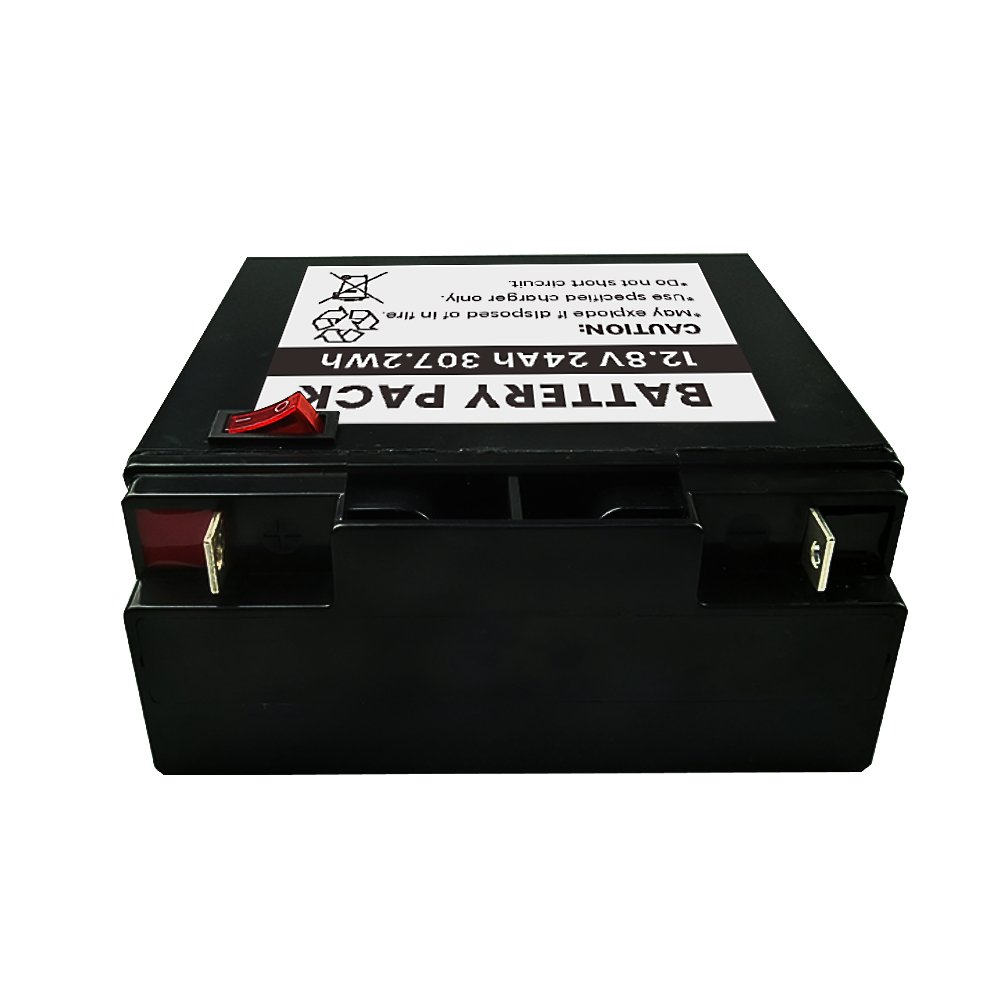
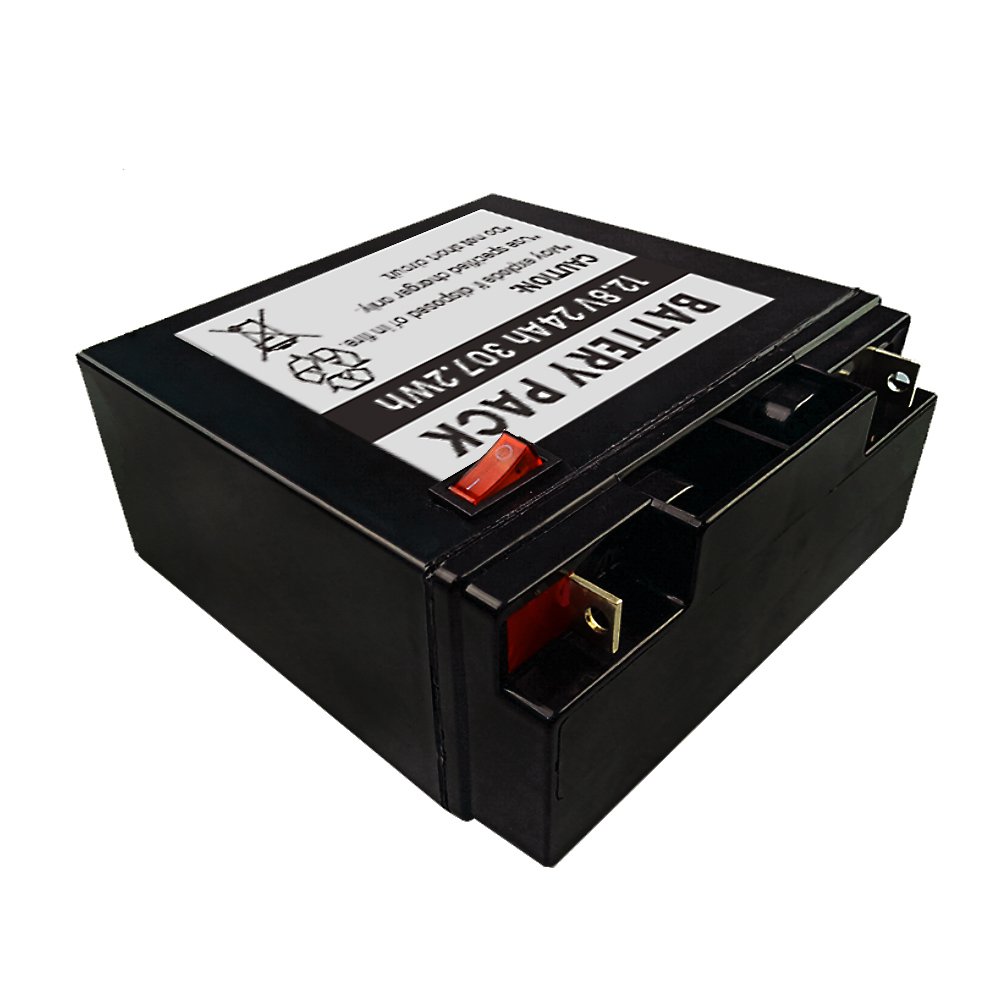
The HNF Battery 12.8V 24Ah LFP pack is built in a 4S1P configuration using premium lithium iron phosphate cells, housed in a compact black ABS enclosure with F2 quick-connect terminals. Here are the full specifications:
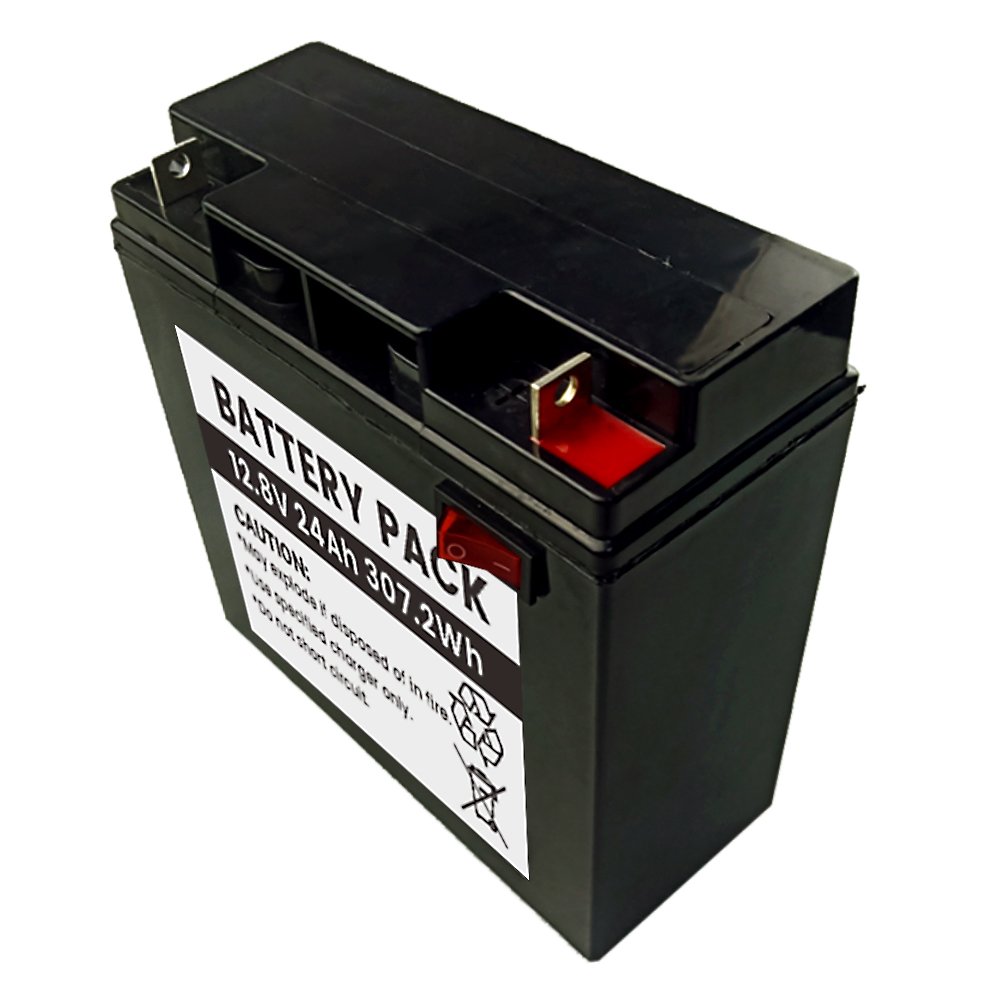
The integrated battery management system (BMS) inside the pack protects both the battery and the connected equipment from abnormal operating conditions:
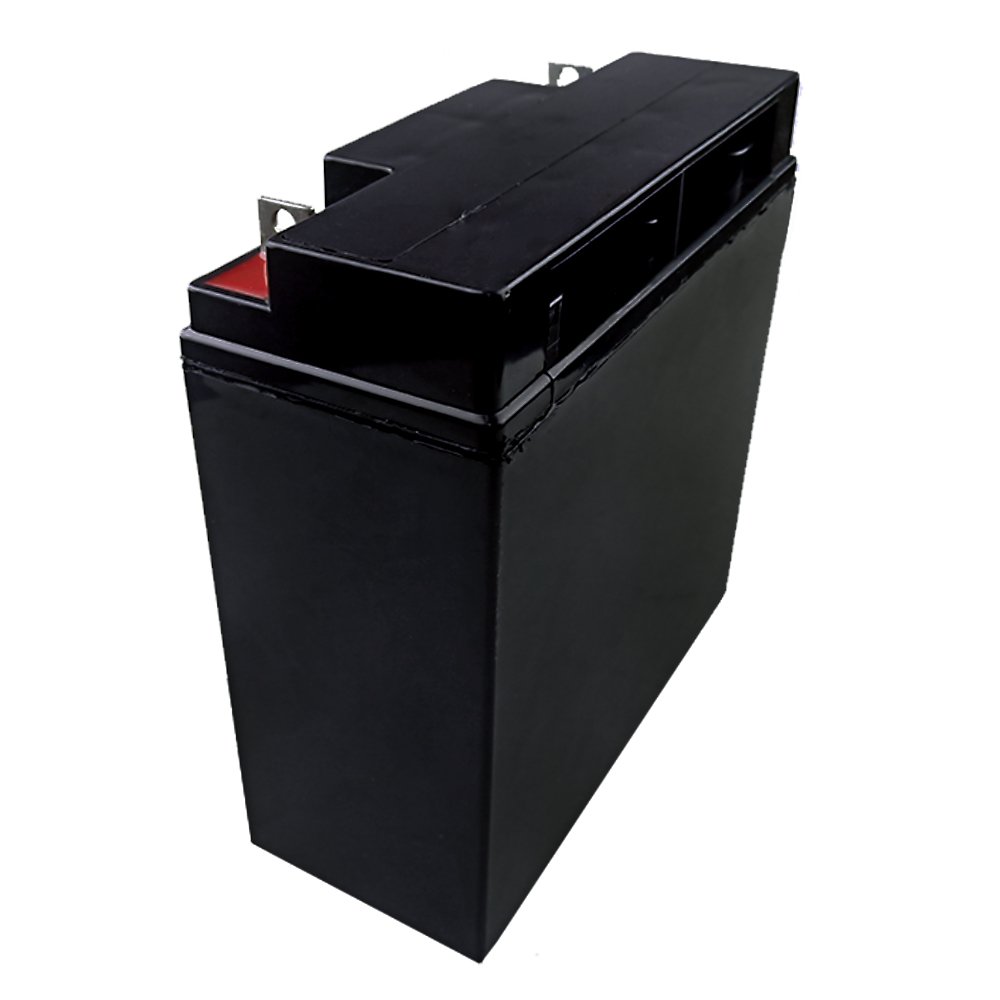
The 12V lead-acid battery market is enormous — everything from car batteries to UPS systems, solar street lights, mobility scooters, and alarm panels runs on 12V lead-acid. The 12.8V LFP pack is engineered as a direct replacement in form factor, voltage, and terminal style:
The HNF 12.8V 24Ah pack uses F2 quick-connect blade terminals and a housing dimension that is compatible with standard Group U1 and Group 24 battery footprints. In most applications, the swap requires no wiring changes, no bracket modifications, and no new charge controller — you simply disconnect the old lead-acid and connect the LFP pack.
LFP operates at a slightly higher nominal voltage than lead-acid (12.8V vs 12.0V), but the charge and discharge curves overlap almost perfectly:
This voltage compatibility means existing 12V chargers, solar charge controllers, and inverters work without modification in most cases — though a charger specifically set for LFP (14.6V absorption) is always the preferred option.
A 12V 24Ah sealed lead-acid battery typically weighs 7–8kg. The 12.8V 24Ah LFP pack weighs 2.3kg — a 70% reduction. For mobility applications (wheelchairs, scooters, trolling motors) and any application where the battery needs to be lifted or carried, this weight saving is transformative.
Small solar installations — residential off-grid kits, solar street lights, solar water pump systems, and RV solar setups — commonly use 12V batteries in a single-string configuration. The 307Wh capacity is well-matched to a 50–100W solar panel with a 10–20Ah daily cycling requirement. The LFP chemistry is particularly suited to solar because it tolerates partial states of charge without damage (unlike lead-acid, which requires full regular charging to prevent sulfation), and its -20°C discharge capability handles cold morning and evening cycles that would stall a lead-acid battery.
Small UPS units (1–3kVA) typically run on one or two 12V batteries in series. A 12.8V 24Ah LFP pack replaces a 12V 24Ah VRLA battery with a unit that weighs 70% less, lasts 4× as long, and requires zero maintenance. For network closet UPS systems, edge computing nodes, and telecom backup, the longer cycle life and calendar life of LFP significantly reduce total cost of ownership over a 5–10 year deployment window.
A mobility scooter running on two 12V 12Ah lead-acid batteries in series weighs 15–20kg total in batteries alone. Replacing that with a single 12.8V 24Ah LFP pack (2.3kg) reduces battery weight by over 10kg, which meaningfully increases the vehicle’s range per charge (less vehicle mass to move) and makes the battery pack much easier to remove for charging. At 24Ah, the pack delivers 20–30km of typical mobility scooter range.
12V trolling motors run at 30–55lb thrust on a single 12V battery. The 12.8V 24Ah LFP pack’s 7–13A overcurrent protection is well-matched to trolling motor current draws, and the 307Wh capacity runs a 30lb thrust motor for 4–6 hours at moderate speed. The lightweight 2.3kg form factor is a major advantage in small boats and kayaks where battery weight directly affects performance.
Commercial security panels, CCTV backup systems, and fire alarm panels commonly use 12V sealed lead-acid batteries as standby power. The 24Ah capacity provides 24–48 hours of standby runtime for most alarm panels, and the LFP chemistry’s low self-discharge rate (2–3% per month) means the battery retains charge during extended panel standby periods without the constant shallow cycling that shortens lead-acid life.
DIY portable power station builders often source 4S LFP cells as the battery module. The pre-built 12.8V 24Ah pack with integrated BMS, terminal block, and manual switch is a ready-to-integrate building block — connect an inverter, add an enclosure, and you have a 300W-rated portable power station with a 307Wh capacity and 3,000+ cycle life.
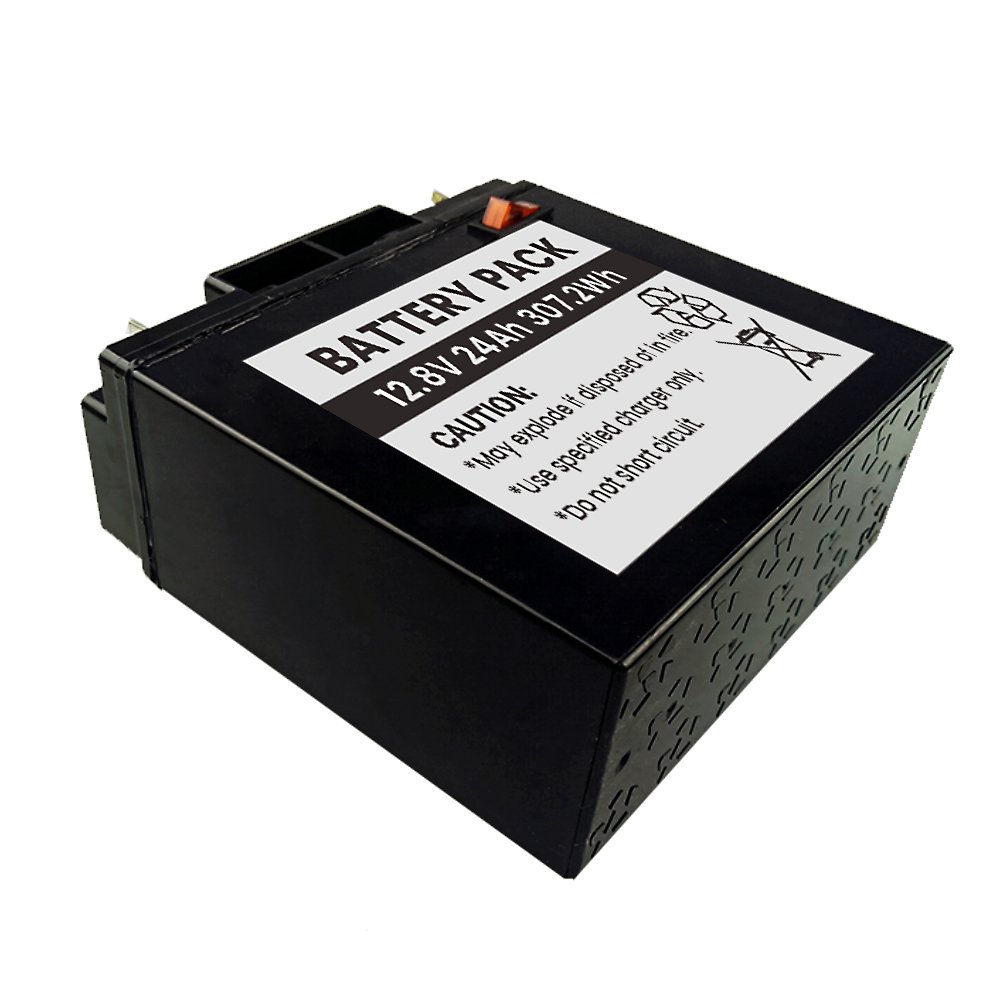
The 12.8V 24Ah LFP pack charges at a constant voltage of 14.6V (3.65V per cell) and a standard current of 2A (0.2C), reaching full charge in ≤ 8 hours. A charger specifically designed for LiFePO4 (LFP mode, 14.6V absorption) is the correct choice and will maximize cycle life.
Compatible charger specifications:
Many modern solar charge controllers (PWM and MPPT) have a dedicated LiFePO4 mode that sets the correct voltage profile automatically.
HNF Battery offers the 12.8V 24Ah LiFePO4 pack in both standard and OEM configurations. Scaling options include:
For volume pricing, custom configurations, or ODM/OEM projects, request an OEM quote with your specifications and projected volumes. Sample units are available for engineering validation.
The case for upgrading from 12V lead-acid to 12.8V LiFePO4 is not a close call on technical merit — LFP wins on cycle life, weight, efficiency, safety, and temperature range. The only remaining barrier is upfront cost, and for any application with more than 500 cycles per year, the LFP battery pays back the premium within 18–24 months through reduced replacement frequency, lower maintenance, and better performance.
For solar installers, mobility equipment distributors, and industrial OEMs specifying battery power for new products, the 12.8V 24Ah LFP pack is the right default choice for most 12V applications.
Browse the full specifications at 12.8V 24Ah LiFePO4 Battery Pack — 4S1P, 307Wh, or request a free sample for your engineering team. For custom configurations, volume pricing, or branded OEM orders, contact the HNF Battery OEM team.
