24V 50Ah LiFePO4 Battery Pack: The Complete 8S Deep-Cycle Guide for Golf Carts, RVs, Solar Storage & Industrial Equipment
The 24V 50Ah LiFePO4 (LFP) battery pack delivers 1,280Wh at just 10.5kg — replacing a 40kg two-battery lead-acid bank. This guide covers 8S LiFePO4 specifications, BMS protection, fast charge capability, and applications for golf carts, RVs, solar storage, and industrial equipment.
The 24V golf cart industry is undergoing a quiet revolution. For decades, fleet operators, resort managers, and facility owners defaulted to flooded lead-acid batteries — bulky, heavy, and demanding weekly maintenance. The 24V 50Ah LiFePO4 (LFP) battery pack changes that equation entirely. Eight LiFePO4 cells in series deliver 1,280Wh of usable capacity in a 10.5kg package, replacing two 12V lead-acid batteries that would weigh 30–40kg and last 300–500 cycles instead of 3,000–5,000.
This guide covers the 24V 8S LiFePO4 configuration, complete specifications, BMS protection, and the application scenarios where this voltage and capacity combination delivers the most value.
The 24V 8S LiFePO4 Configuration Explained
The “8S” designation means eight lithium iron phosphate (LiFePO4) cells in series, with one parallel string (1P). Each LFP cell has a nominal voltage of 3.2V, so eight cells in series produce a nominal pack voltage of 25.6V. This is commonly labeled as a “24V system” because it operates within the 24V lead-acid voltage range.
Key voltage milestones for a 24V 8S LFP pack:
Fully charged: 29.2V (8 × 3.65V per cell)
Nominal (50% SOC): 25.6V (8 × 3.2V per cell)
Discharge cutoff: 17.6V (8 × 2.2V per cell)
This voltage profile matches the operating range of 24V lead-acid battery systems almost exactly, making the 8S LFP pack a direct replacement with no inverter or charger changes required in most installations.
HNF 24V 50Ah LiFePO4: Complete Specifications
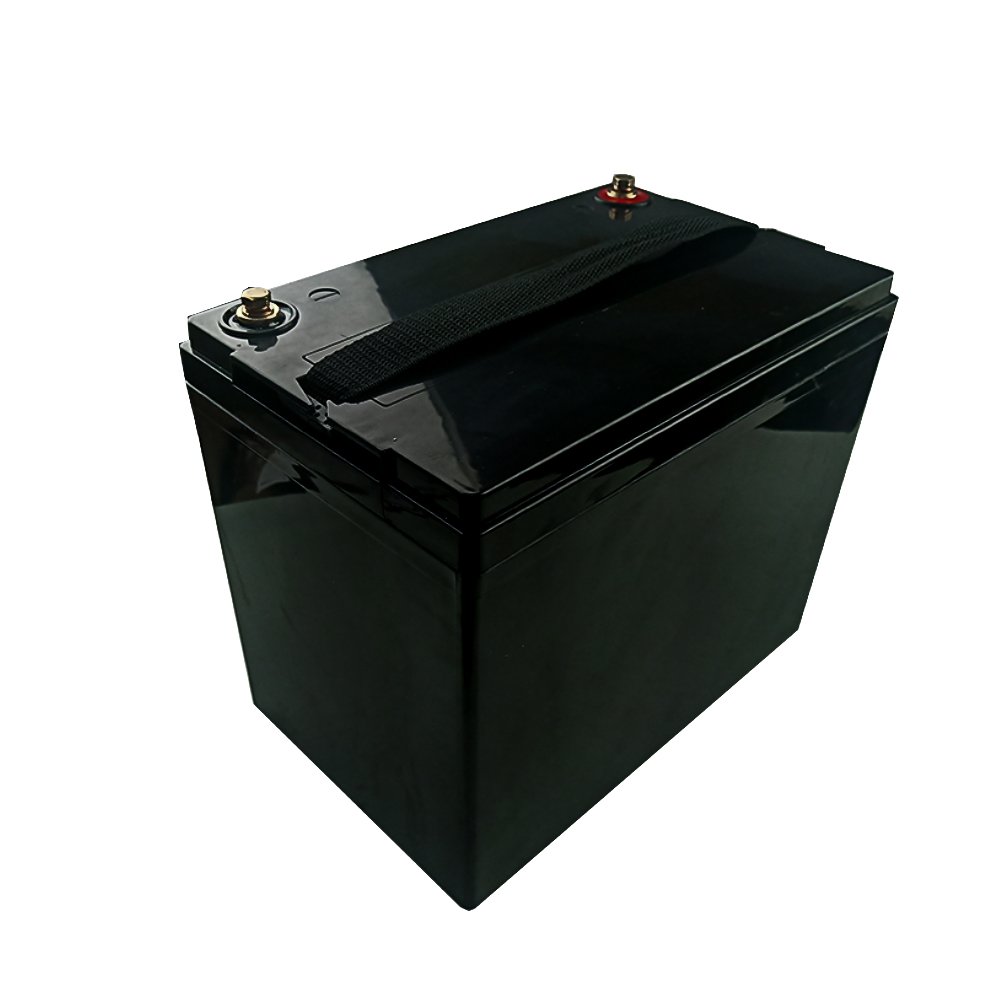
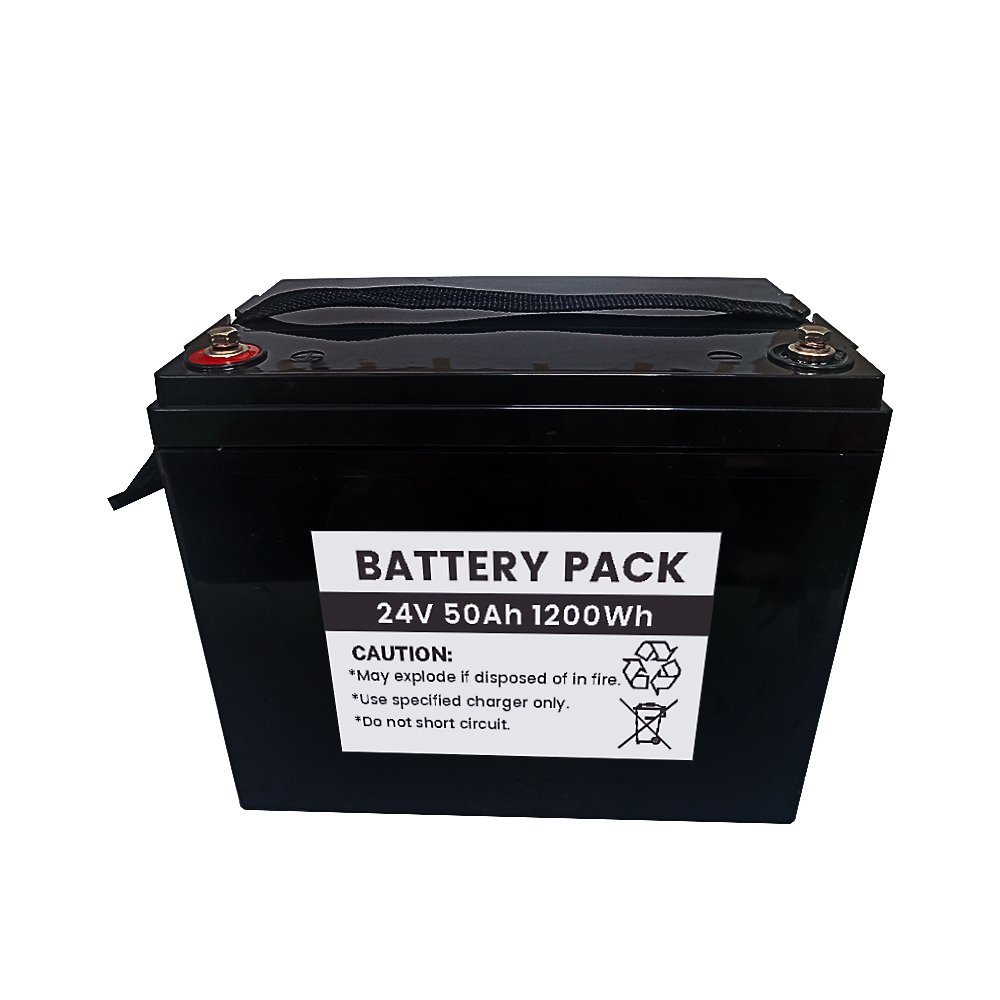
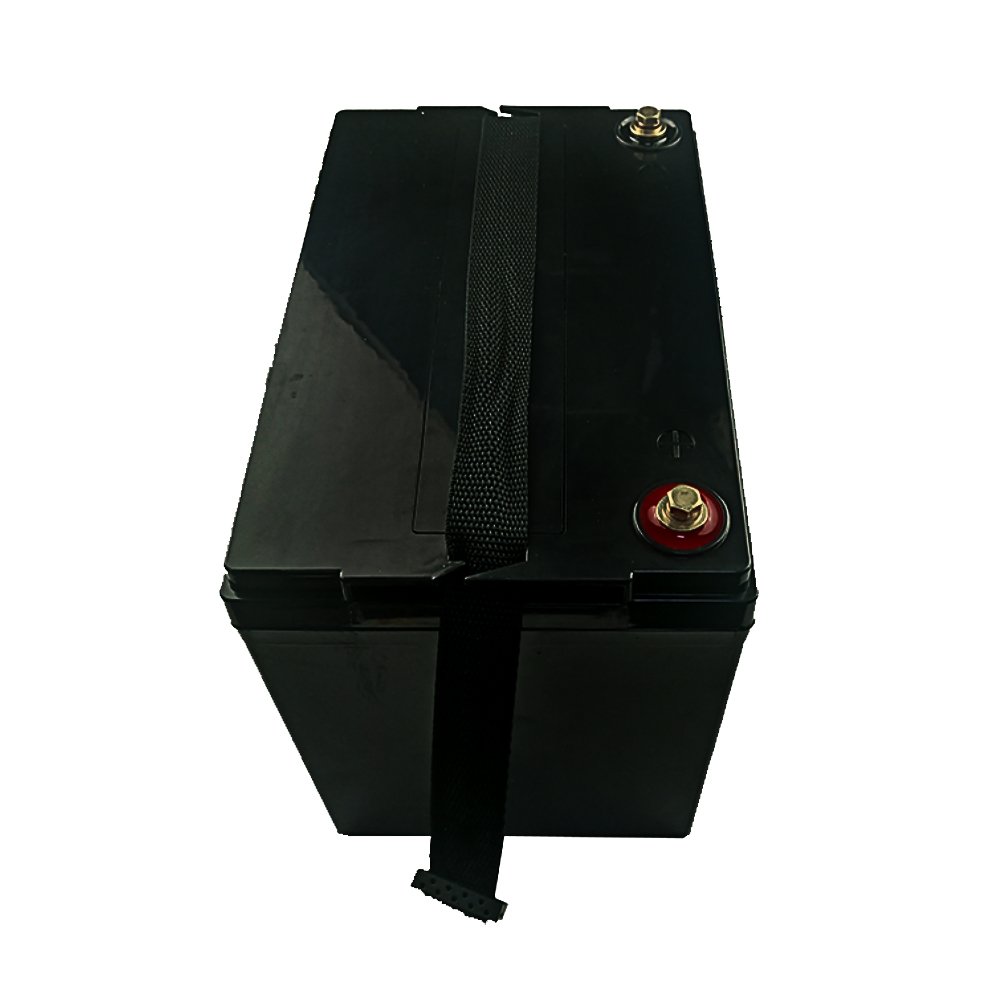
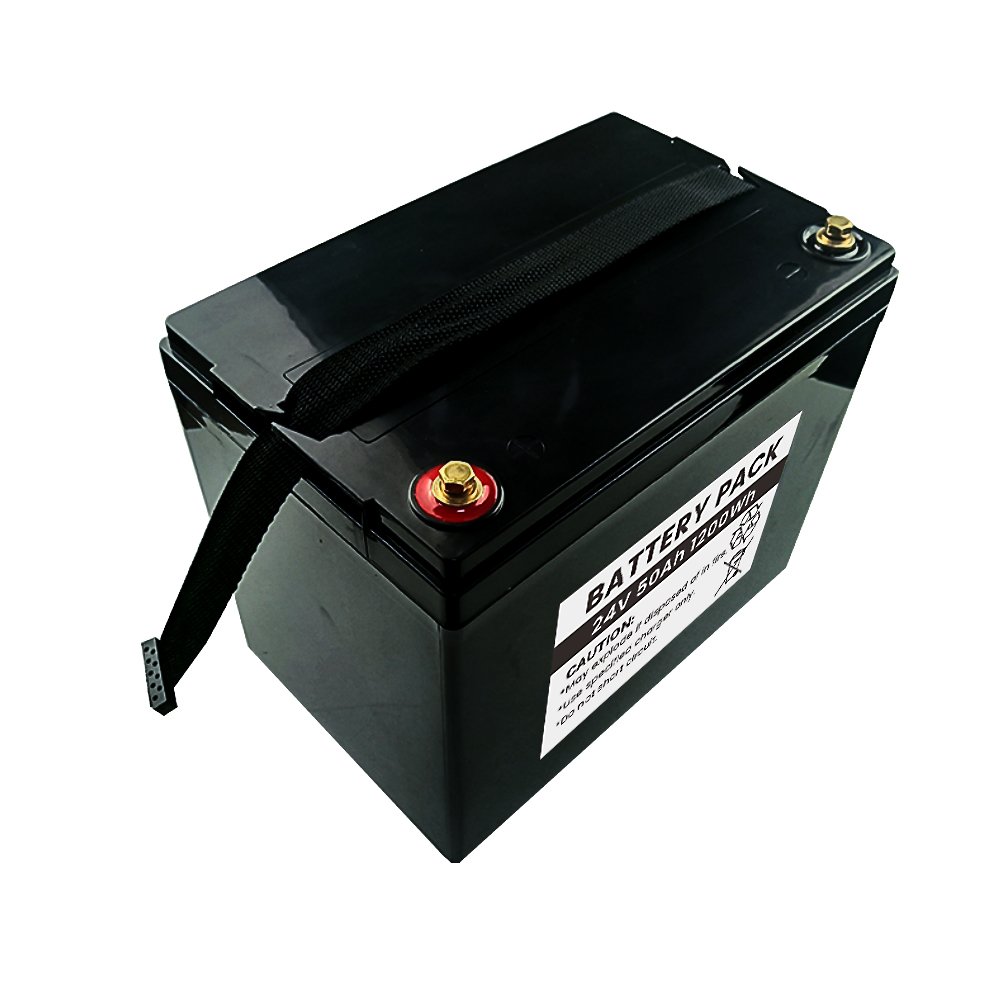
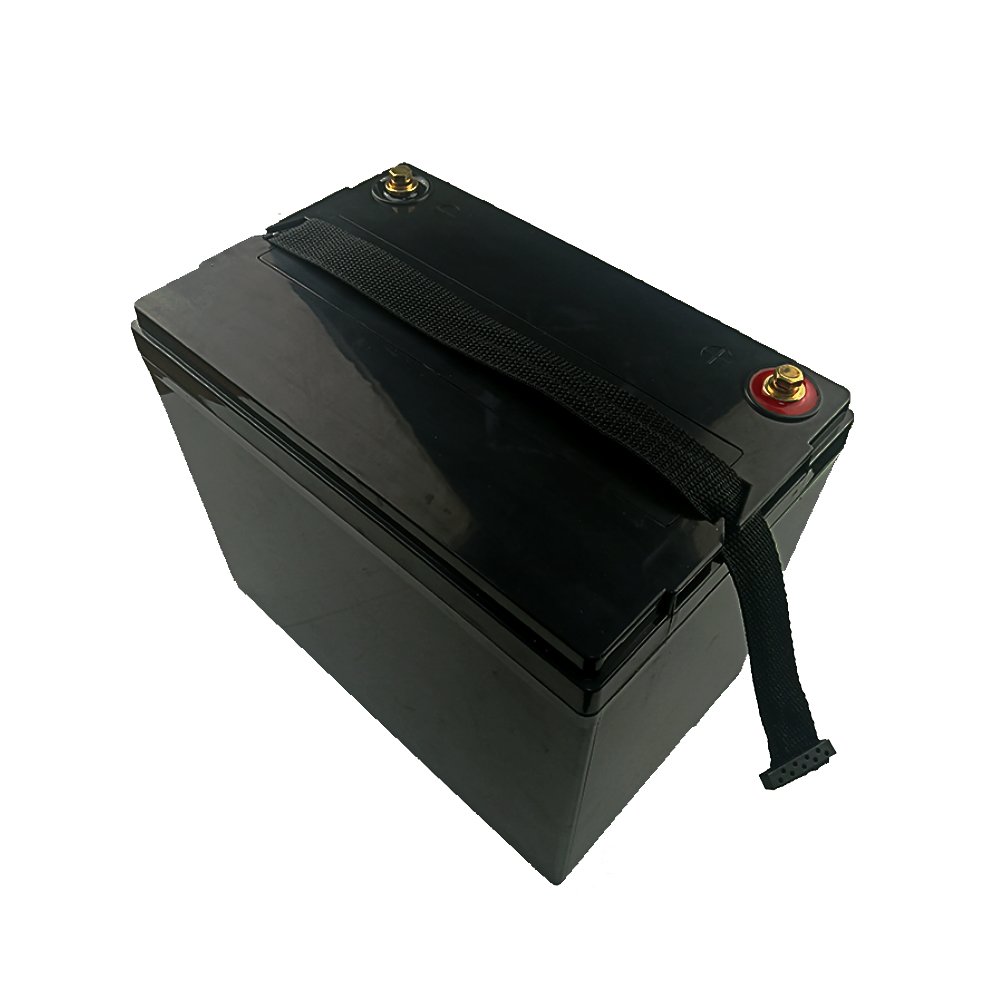
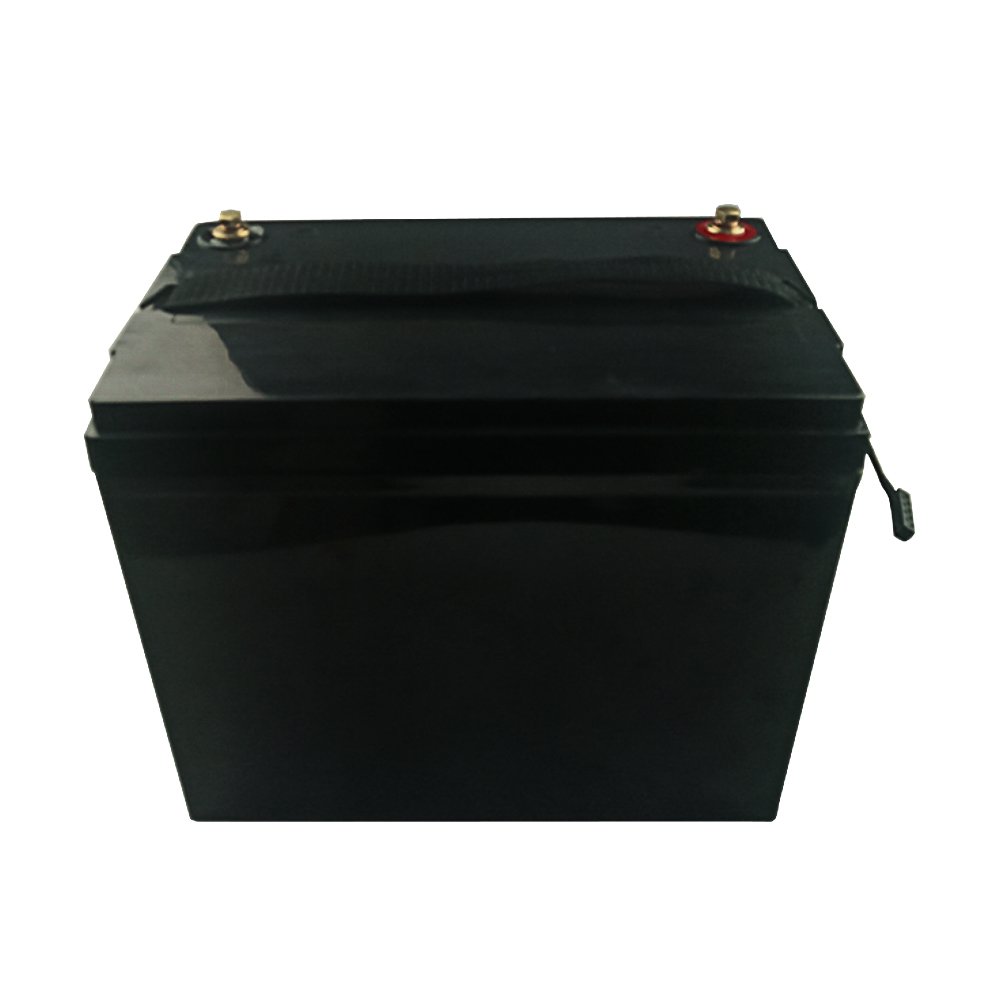
The HNF Battery 24V 50Ah LFP pack is built in an 8S1P configuration using 28Ah-class prismatic LFP cells, housed in a compact black ABS enclosure with M8 bolt terminals and a BMS communication cable. Here are the full specifications:
Cell chemistry: LiFePO4 (lithium iron phosphate)
Cell model: 28148115A-8S1P
Configuration: 8S1P
Nominal voltage: 25.6V (labeled 24V system)
Nominal capacity: 50Ah
Minimum capacity: 47.5Ah
Rated energy: 1,280Wh
Standard charge: 0.2C (10A), ≤ 8 hours
Fast charge: 0.5C (25A), ≤ 4 hours
CV charge voltage: 29.2V
Standard discharge: 10A (0.2C) continuous
Max discharge: 25A (0.5C) continuous
Discharge overcurrent protection: 110–220A
Low-voltage protection: 2.1V per cell (17.6V pack level cutoff)
Internal resistance: 35mΩ (AC 1kHz) — very low, meaning high efficiency
The integrated battery management system (BMS) in the 24V 50Ah pack manages eight cells simultaneously, providing comprehensive protection across all operating conditions:
Over-charge protection: Disconnects charging if any cell exceeds 3.65V, protecting against overvoltage during fast charging or faulty chargers.
Over-discharge protection: Shuts down the load when pack voltage reaches 17.6V (2.2V per cell), preventing deep discharge damage.
Overcurrent protection (discharge): Triggers between 110–220A — enough to handle motor startup currents in golf carts and industrial vehicles while protecting against sustained fault currents.
Short-circuit protection: Instant disconnection in the event of a wiring fault.
Cell balancing: Passive balancing across all 8 cells keeps each cell at equal charge levels, maximizing pack longevity.
BMS communication cable: Multi-pin balance port allows external monitors, data loggers, or display units to read real-time cell voltages and pack state.
Temperature monitoring: Charging halts below 0°C and above 45°C to prevent lithium plating or thermal stress.
Golf Carts: The 24V LFP Sweet Spot
Golf carts are the original home for 24V deep-cycle batteries, and they remain the most compelling application for the 24V 50Ah LFP pack. Most golf carts run on a 24V system using two 12V batteries in series — and the 24V 50Ah LFP pack replaces that entire two-battery bank with a single unit.
The math is compelling:
Lead-acid replacement: Two 12V 50Ah flooded lead-acid batteries weigh 30–40kg combined. One 24V 50Ah LFP pack weighs 10.5kg — a 70–75% weight reduction.
Range: At 10A continuous discharge (0.2C), the 1280Wh pack delivers approximately 3–4 hours of runtime at moderate cart speed. For an 18-hole golf course, this typically covers a full round.
Charge time: Standard charge at 10A in ≤ 8 hours (overnight), or fast charge at 25A in ≤ 4 hours between rounds.
Cycle life: 3,000–5,000 cycles vs 300–500 for lead-acid. At one cycle per day, that is 8–14 years of service life vs 1–1.5 years for lead-acid.
Maintenance: Zero maintenance vs weekly water checks for flooded lead-acid. No acid spills, no corrosion, no corrosion-related electrical problems.
For golf resorts, retirement communities, and facility operators managing fleets of 20–100 carts, the switch to 24V LFP reduces both direct battery replacement costs and maintenance labor — often recovering the upfront cost premium within 2–3 years.
RVs and Recreational Vehicles: Off-Grid Power Upgrade
A 24V electrical system in an RV offers significant advantages over 12V for larger installations. The higher voltage reduces current draw for the same power level, meaning thinner (cheaper) wiring and lower transmission losses across long cable runs inside the vehicle.
The 24V 50Ah LFP pack (1,280Wh) supports:
Lighting and appliances: 1,280Wh runs LED lighting, a 12V fridge for 12–24 hours, phone charging, and water pump for 2–3 days without solar input.
Inverter support: 25A continuous discharge supports inverters up to 500–600W — enough for a microwave, coffee maker, or laptop chargers in a small-to-medium RV.
Series expansion: Connect two packs for 48V 50Ah (2,560Wh) or four packs for 48V 100Ah (5,120Wh) as energy needs grow.
Fast charging: 25A input from a shore power charger or alternator input recovers full capacity in ≤ 4 hours.
Solar Energy Storage: 24V Off-Grid Systems
Small-to-medium off-grid solar installations commonly operate at 24V — a sweet spot between 12V (too much current, heavy cables) and 48V (requires more panels in series for the same system voltage). The 24V 50Ah LFP pack (1,280Wh) is well-matched to:
Solar street lights and area lights: 24V LED street lights run at full brightness for 8–12 hours on a single full charge, with the LFP chemistry tolerating partial daily cycling without degradation.
Cabin and cottage backup: 1,280Wh provides overnight backup for lighting, communication devices, and small appliances — enough for emergency power during grid outages.
Telecom and remote infrastructure: 24V is a standard telecom power rail. The LFP pack provides reliable backup for cell towers, small base stations, and remote monitoring equipment with years of maintenance-free service.
Two-pack 48V system: Two 24V 50Ah packs in series create a 48V 50Ah system (2,560Wh) suitable for higher-power inverters and larger off-grid homes.
Industrial Equipment: AGVs, Floor Scrubbers, and Warehouse Vehicles
24V is the standard operating voltage for a wide range of industrial battery-powered equipment. The HNF 24V 50Ah LFP pack is engineered for this market:
Automated Guided Vehicles (AGVs): Warehouse robots, delivery bots, and sorting vehicles commonly run on 24V. The 25A max discharge handles motor startup currents, and the 1,280Wh capacity supports 4–8 hours of continuous operation depending on duty cycle.
Floor scrubbers and sweepers: Commercial floor cleaning machines run on 24V battery platforms. The LFP pack’s 4× cycle life advantage over lead-acid significantly reduces total cost of ownership for cleaning contractors.
Personnel carriers and burden carriers: Factory and airport personnel carriers, luggage carts, and campus shuttles often run on 24V — the LFP pack reduces vehicle weight, increasing passenger or cargo capacity.
Pallet jacks and stackers: 24V electric pallet jacks and stackers benefit from the LFP pack’s high discharge efficiency and fast charging for multi-shift operations.
24V vs 48V: Which System Voltage for Your Application?
The choice between 24V and 48V depends on your total power requirements and growth plans:
24V (single pack): Up to ~600W inverter, single-phase motors up to 1HP, single charging source. Simplest installation, lowest upfront cost. Suitable for golf carts, small RVs, single-shift industrial equipment.
48V (two 24V packs in series): Up to ~1,200W inverter, larger motors, longer cable runs. Better efficiency at higher power. Suitable for large RVs, multi-shift warehouse equipment, larger solar installations.
The HNF 24V 50Ah pack is designed so that two units in series create a proper 48V system — no special engineering required, just series connection using the M8 terminals.
LFP vs Lead-Acid vs NMC: Full Comparison
Weight (24V 50Ah equivalent): LFP 10.5kg vs NMC 9.5kg vs Lead-acid 40–50kg
Usable capacity: LFP 100% (50Ah) vs NMC 100% vs Lead-acid 50% (25Ah effective)
Energy density: LFP 122Wh/kg vs NMC 160Wh/kg vs Lead-acid 30–40Wh/kg
Cycle life @ 80% DoD: LFP 3,000–5,000 vs NMC 1,000–2,000 vs Lead-acid 300–500
Fast charge support: LFP 0.5C (25A) vs NMC 0.5C vs Lead-acid 0.1–0.15C
Internal resistance: LFP 35mΩ vs NMC 25–30mΩ vs Lead-acid 15–25mΩ (but lead-acid degrades over life)
Thermal runaway risk: LFP Very Low vs NMC Medium-High vs Lead-acid None
Charge efficiency: LFP 95–98% vs NMC 90–95% vs Lead-acid 70–85%
Self-discharge (monthly): LFP 2–3% vs NMC 5–8% vs Lead-acid 4–6%
Upfront cost: LFP 2–3× lead-acid vs NMC 2–3× lead-acid
Total cost over 5 years: LFP lowest (1 replacement) vs NMC moderate (1–2 replacements) vs Lead-acid highest (5–10 replacements)
Charging: Standard and Fast Charge Options
The 24V 50Ah LFP pack supports two charging modes:
Standard charge (0.2C / 10A): 14.6V per group of 4 cells, 29.2V total CV. Full charge in ≤ 8 hours. Suitable for overnight charging at home, resort clubhouse, or facility depot.
Fast charge (0.5C / 25A): Same CV voltage, higher current. Full charge in ≤ 4 hours. Suitable for multi-shift operations, fast turnaround at golf courses with multiple rounds per day, and industrial applications where downtime is costly.
Compatible charger specifications:
Absorption voltage: 29.2V (8 × 3.65V)
Float voltage: 27.2V or disabled (LFP does not require float)
Charge current: 10–25A depending on speed requirement
Low-temperature cut-off: 0°C for charging
OEM Customization and Scaling Options
HNF Battery offers the 24V 50Ah LiFePO4 pack in standard and OEM configurations. Scaling and customization options include:
Series connection: Two packs for 48V 50Ah (2,560Wh); four packs for 48V 100Ah (5,120Wh)
Parallel connection: Multiple packs in parallel for extended runtime
Communication: RS485, CAN bus, or custom BMS protocols for integration with vehicle management systems
Display units: External SOC gauge, voltage display, or LED indicator panel connected via the BMS communication port
Housing options: Metal enclosures, IP-rated shells, or custom molded ABS
Terminal configurations: Anderson SB50/SB120, ring terminals, aviation connectors
Capacity scaling: 40Ah, 60Ah, 100Ah options in 8S configuration for different runtime requirements
Branding: Custom labels, laser marking, and branded packaging
For volume pricing, custom configurations, or fleet integration projects, request an OEM quote with your specifications, application details, and projected volumes.
Conclusion: 24V LFP Is the Smart Long-Term Choice
For anyone running 24V lead-acid batteries in golf carts, RVs, solar installations, or industrial equipment, the economics of switching to LiFePO4 are compelling and getting simpler. The 24V 50Ah LFP pack delivers 1,280Wh in a 10.5kg unit, charges in 4 hours, lasts 3,000–5,000 cycles, and requires zero maintenance — a complete solution that outperforms lead-acid on every metric that matters beyond initial purchase price.
The 8S LiFePO4 configuration is also future-proof: it scales naturally to 48V by adding a second pack in series, making it a platform that grows with your energy needs rather than requiring a complete system redesign.